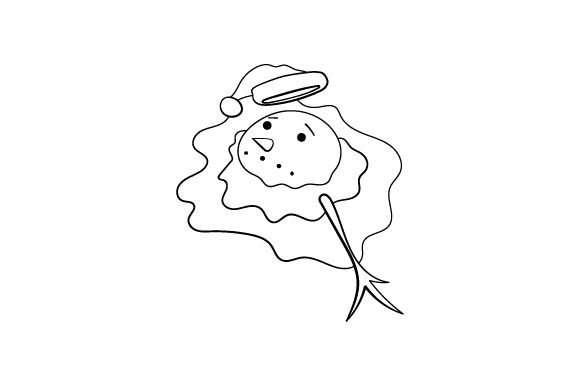
A Designer's Take on the Melting Snowman Embroidery File
When you open an embroidery design file, the first thing you do is imagine it stitched out. You picture the thread, the fabric, and the finished product in a customer's hands. That's exactly where my mind went with the Melting Snow Man, Line Art. It’s a design that immediately tells a story, and that’s a powerful starting point for any embroidery project.
The Quiet Charm of a Winter Scene
The mood here is undeniably wistful and sweet. It’s not a jolly, bold Santa; it’s a gentle, almost melancholy line art snowman melting away. That gives it a unique personality—a bit nostalgic, a bit humorous, and very approachable. The layout is clean and central, with the melted shape creating a soft, organic footprint that won't feel overly rigid on a curved surface like a cap. The detail level is perfect for embroidery: clear outlines without tiny, fussy elements that might get lost in stitching. This isn't just a Christmas icon; it’s a winter moment, which broadens its appeal beyond strict holiday decor.
Where This Design Finds Its Home
In my practice, I see this Melting Snow Man, Line Art shining on a few specific products. It feels born for a cozy, washed-cotton sweatshirt or a soft knit baby blanket—items that carry that warm, personal vibe. I’d also lean towards using it for boutique kitchen towels or apron patches; the theme is light and kitchen-friendly. For a craft business, this design could be the star of a simple embroidered pillow cover or a linen tote bag, turning a basic craft into a storytelling product. The line art style lends itself beautifully to a single-color stitch, making it fantastic for quick, impactful personalization on holiday gifts.
Stitching It Out: Real-World Embroidery Considerations
Let’s walk through a real scenario. Imagine you’re an Etsy seller preparing a custom embroidered tote bag as a winter gift. You’ve hooped your natural canvas, chosen a steel blue thread for a subtle look, and loaded the Melting Snow Man, Line Art file. Because it's line art, the stitch density will likely be manageable—not a heavy fill stitch area that could stiffen the bag. Your main concern will be clarity. On a textured fabric like canvas, fine lines can sometimes break up. A good stabilizer is key here. The melting, drippy lines should translate well into a running stitch or a slim satin stitch, maintaining that hand-drawn feel.
On the other hand, this design would need careful testing on very small hoop sizes. If you’re thinking of putting it on a baby bib or the curved side of a cap, you must scale it down and stitch a sample first. Those elegant, melting contours could become a blurred muddle if reduced too much. Similarly, on dark fabrics, the single-line concept relies entirely on high-contrast thread. A white or light grey thread on a black sweatshirt would pop beautifully, but you’d want to ensure your machine handles the contrast without skipping.
When to Approach with Caution
Some applications require a second thought. Thin, stretchy fabrics like certain t-shirts might distort the clean lines if the stabilizer isn't robust. I’d avoid using it as a tiny accent on a layered garment collar where the detail would be lost. The design’s strength is its silhouette; cramming it into a dense area of other embroidery would dilute its charm. For products destined for frequent, heavy washing—like everyday tea towels—a tighter, denser stitch might hold up better, so reviewing the actual stitch density of your specific file is a practical step.
How This Design Elevates Your Finished Product
The visual appeal of the Melting Snow Man, Line Art is its subtle intelligence. It feels modern and thoughtful, which boosts the perceived value of a handmade product. A customer looking at this on a pillow cover isn't just seeing a snowman; they’re seeing a mood, a bit of wit. That builds engagement and can make your craft stand out at a fair or in an Etsy listing. For brand consistency, if your small shop specializes in minimalist, narrative designs, this fits the portfolio perfectly.
From a professional standpoint, the clean execution promises stitching clarity, which directly impacts customer trust. A cleanly embroidered item looks professional, not homemade. Its giftability is high—it’s personal without being overly sentimental, making it a great choice for a winter wedding gift or a non-traditional holiday present. As a digital product seller offering the file itself, the inclusion of multiple formats (SVG, PNG, EPS, DXF) means you’re providing a versatile commercial asset for other makers.
Practical Notes From the Hoop
Before you commit this to a client’s project or your own merchandise, do the straightforward tests we all should do. Run it on scrap fabric first, ideally the same material as your final product. Check your thread color contrast against both light and dark backgrounds; sometimes a mid-tone grey works better than stark white. Inspect the small details in the melted shape after stitching—are the curves smooth? Does it read clearly at a distance?
Use black and white printable mockups to see how it works as a graphic asset for your listings. Confirm the hoop size needed for your intended product; the design information provided doesn’t specify this, so you’ll need to determine it in your software. And crucially, always confirm the licensing terms for this embroidery file before selling finished items or incorporating it into commercial embroidery projects. Knowing you have the right to use it for your craft business is the foundation of a professional operation.
In essence, the Melting Snow Man, Line Art is a design with emotional resonance and practical versatility. It asks for a bit of thoughtful setup—choosing the right fabric, thread, and product—but rewards you with a finished piece that feels designed, not just decorated. It’s a strong asset for any maker looking to add a touch of quiet winter storytelling to their work.